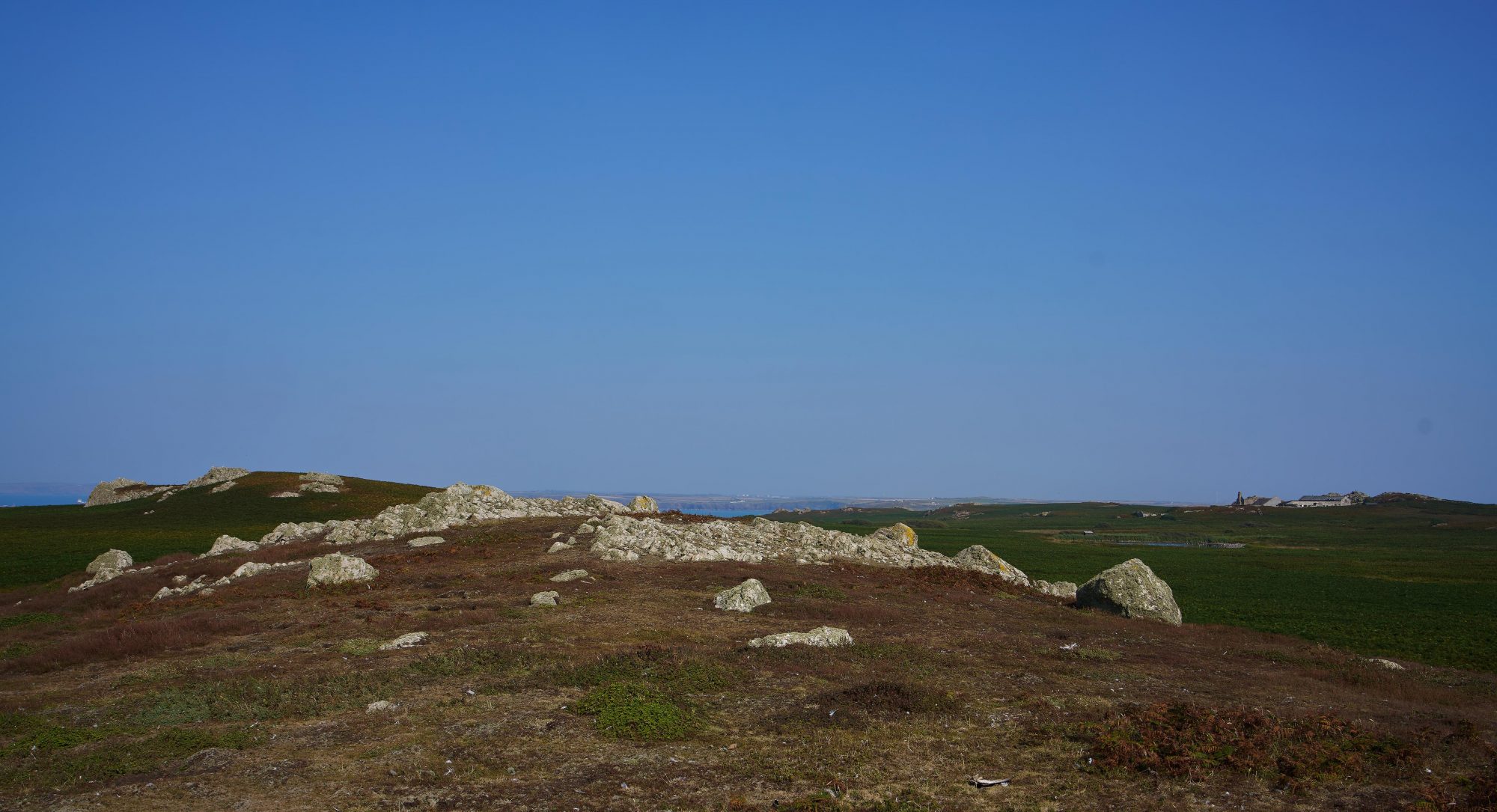
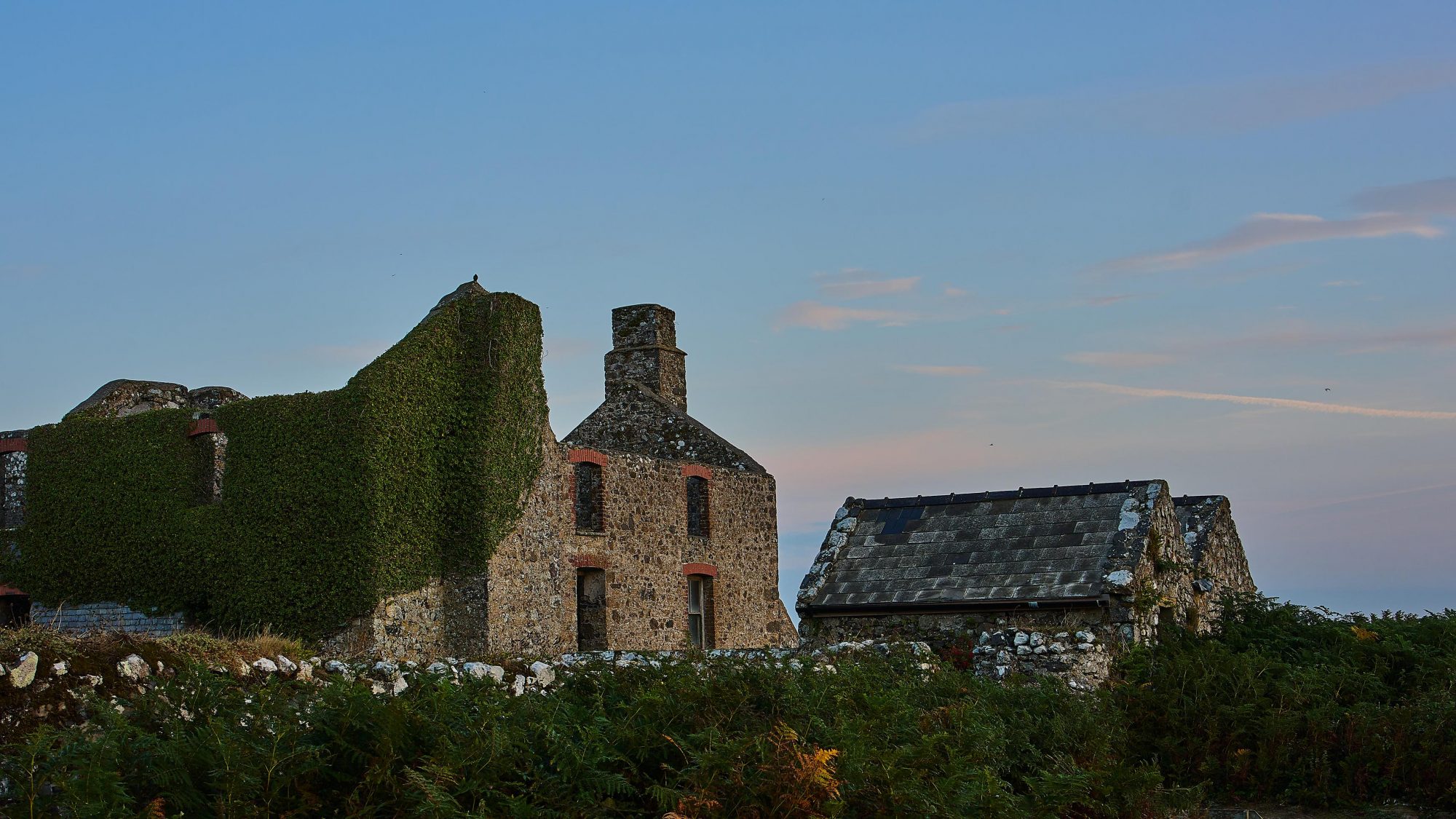
I’m sitting at a sturdy pine table looking out at the courtyard of the old farm. Around it are decaying dry-stone walls topped with dried out grasses and plants. Opposite are the ruins of the farm house, clad in slate tiles and ivy with the roof long since gone. Beyond the walls is a sea of bracken, broken by rocky outcrops. There are no roads here, no cars, no bikes. The only mechanised transport is a dumper truck which brings our bags up from the jetty at North Haven where the boats come in.
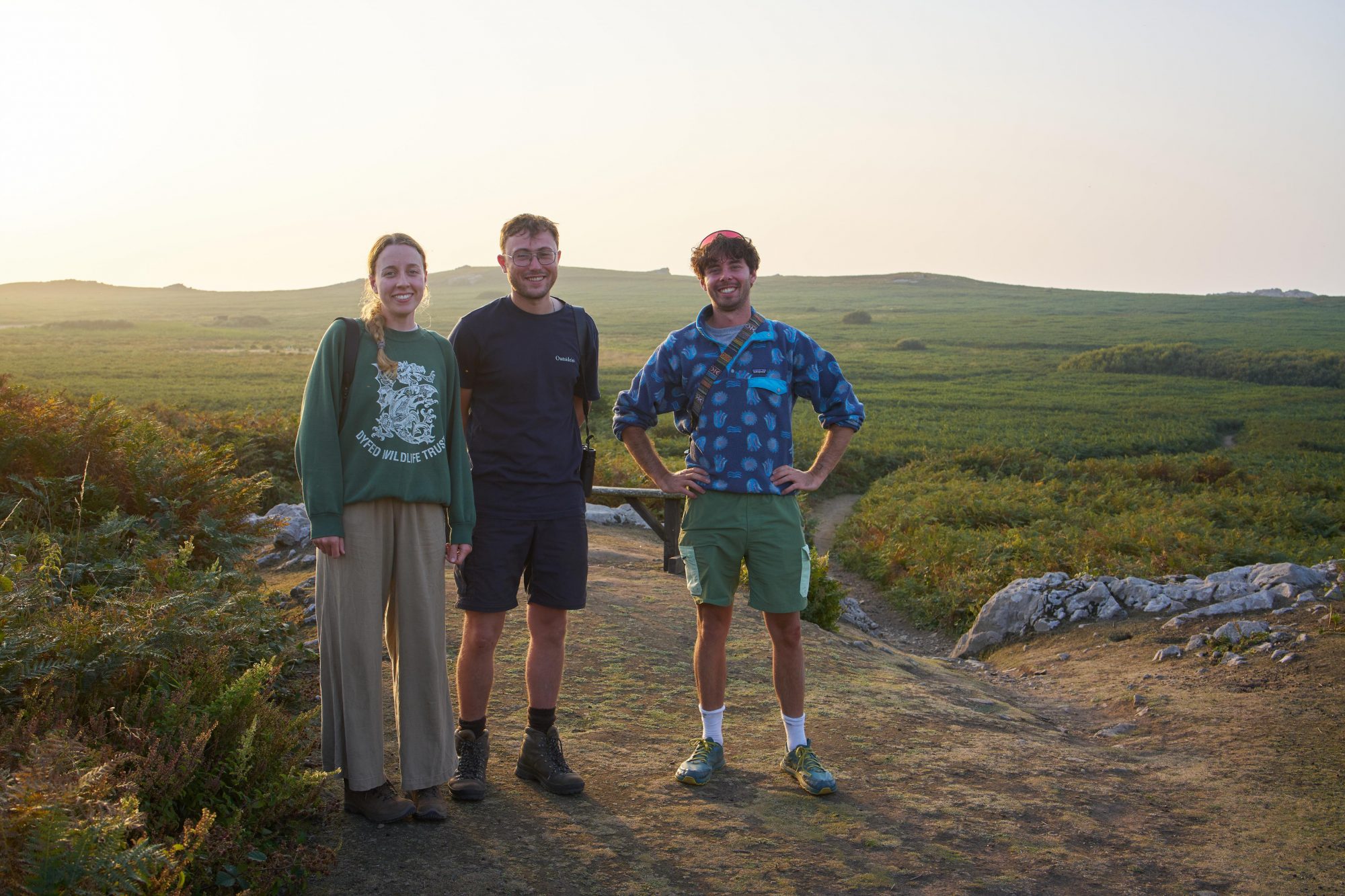
It’s Skomer Island off the coast of Pembrokeshire, a place I have visited for a day many times over the past 20 years, but have never before been able to spend hours walking round the well-trodden paths with only the birds and the rabbits for company. I’m here for 4 days in a modernised out-building converted to a ten-person hostel for overnight guests, and this being an odd time of year in the nature fraternity, I’m the only guest. I’m not without company though – there are at a rough guess ten others staying in round the courtyard – staff and volunteers. We meet up in the evening when we log all the birds, mammals, Butterflies and any other living beings that have been spotted during the day. These young people (below) are keen bird-watchers, proudly recording sightings of Dolphins, Curlews, Marsh Harrier, Pied Flycatcher and, to laughter from me, a Robin and a Blue Tit. Well – these are rare birds here!
It’s an odd time of year because the big colonies of sea birds – tens of thousands of guillemots, razorbills and puffins have all gone. Their chicks have been raised, urged off their nest ledges to crash-land in the sea, and now all of them, many thousands, will be way out in the ocean, their natural home. Skomer is Puffin Central and when those quaintly human looking birds are nesting, it is crowded with as many people as the Wildlife Trusts can accommodate. I’ve done all that, been to The Wick where photographers jostle for space to get that iconic picture of a puffin landing, it’s beak stuffed with sand-eels to feed its chick in the hundreds of burrows beneath our feet. Now I prefer the solitude.
The Wick is an inlet flanked on one side by a huge vertical cliff. At the head of the inlet there are some seats and temporary fencing to keep the crowds of people away from the burrows. The puffins don’t understand the fences and waddle around beneath the feet of the delighted puffin watchers. It’s a bit like one of those busy sea-side cafes where the birds are so used to people they hop up onto the tables to be fed.
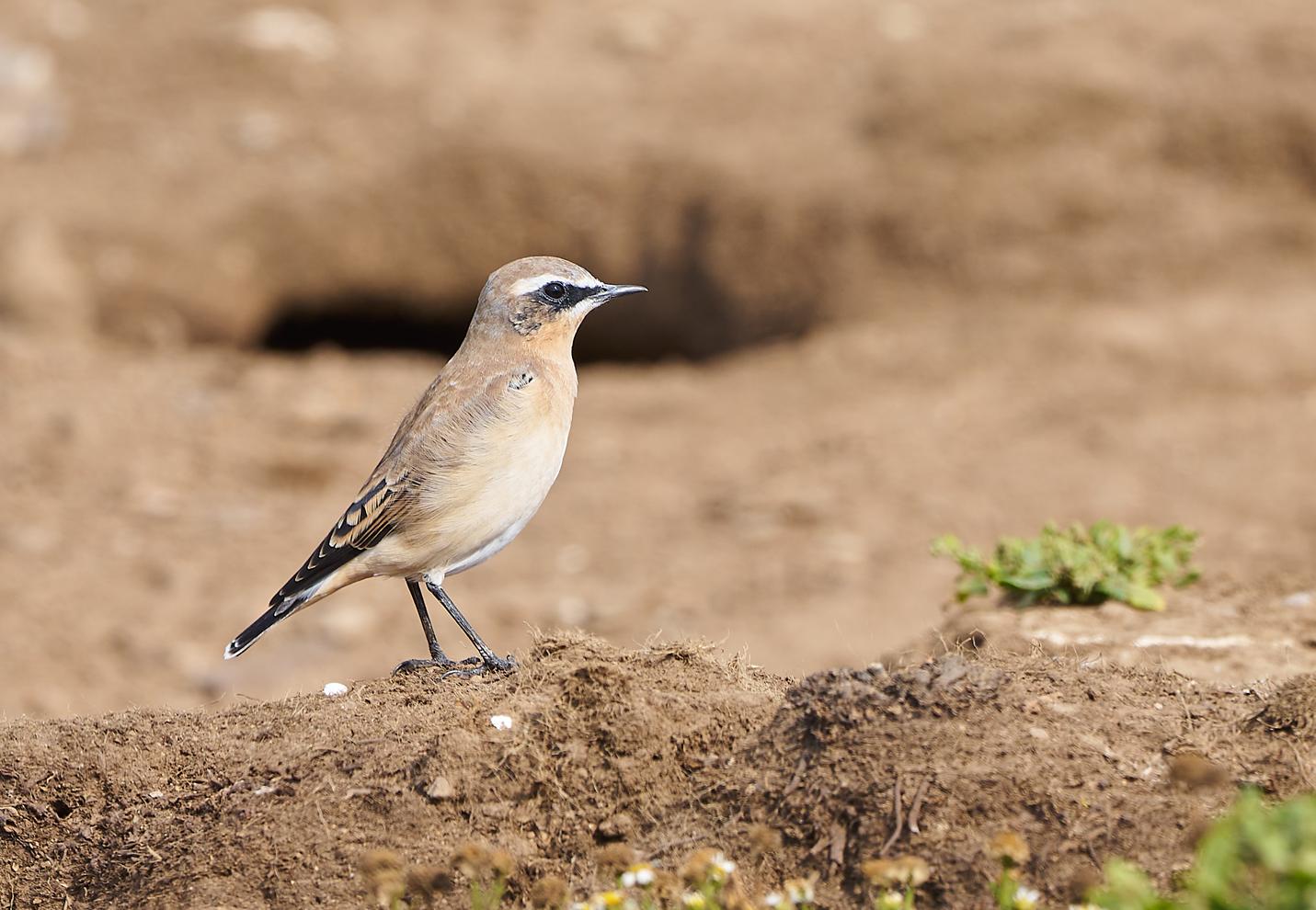
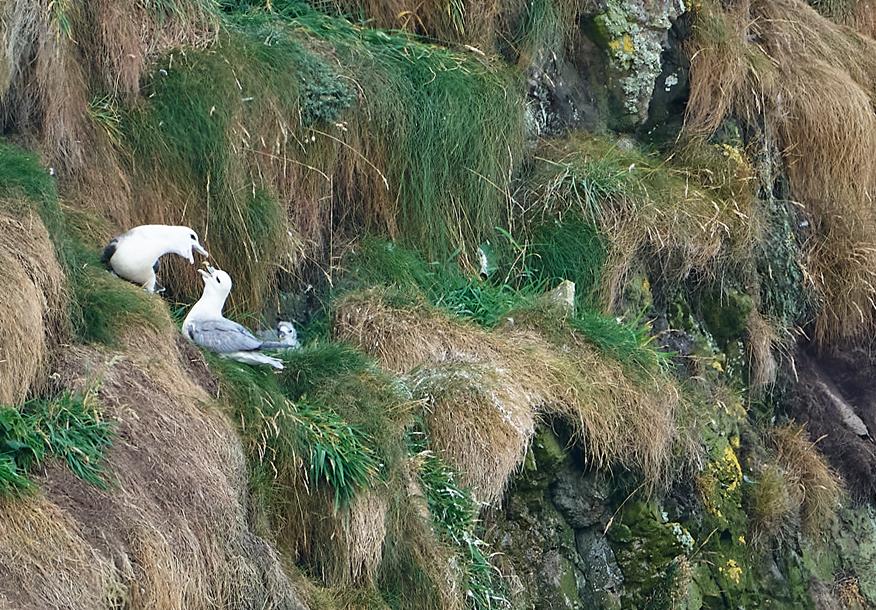
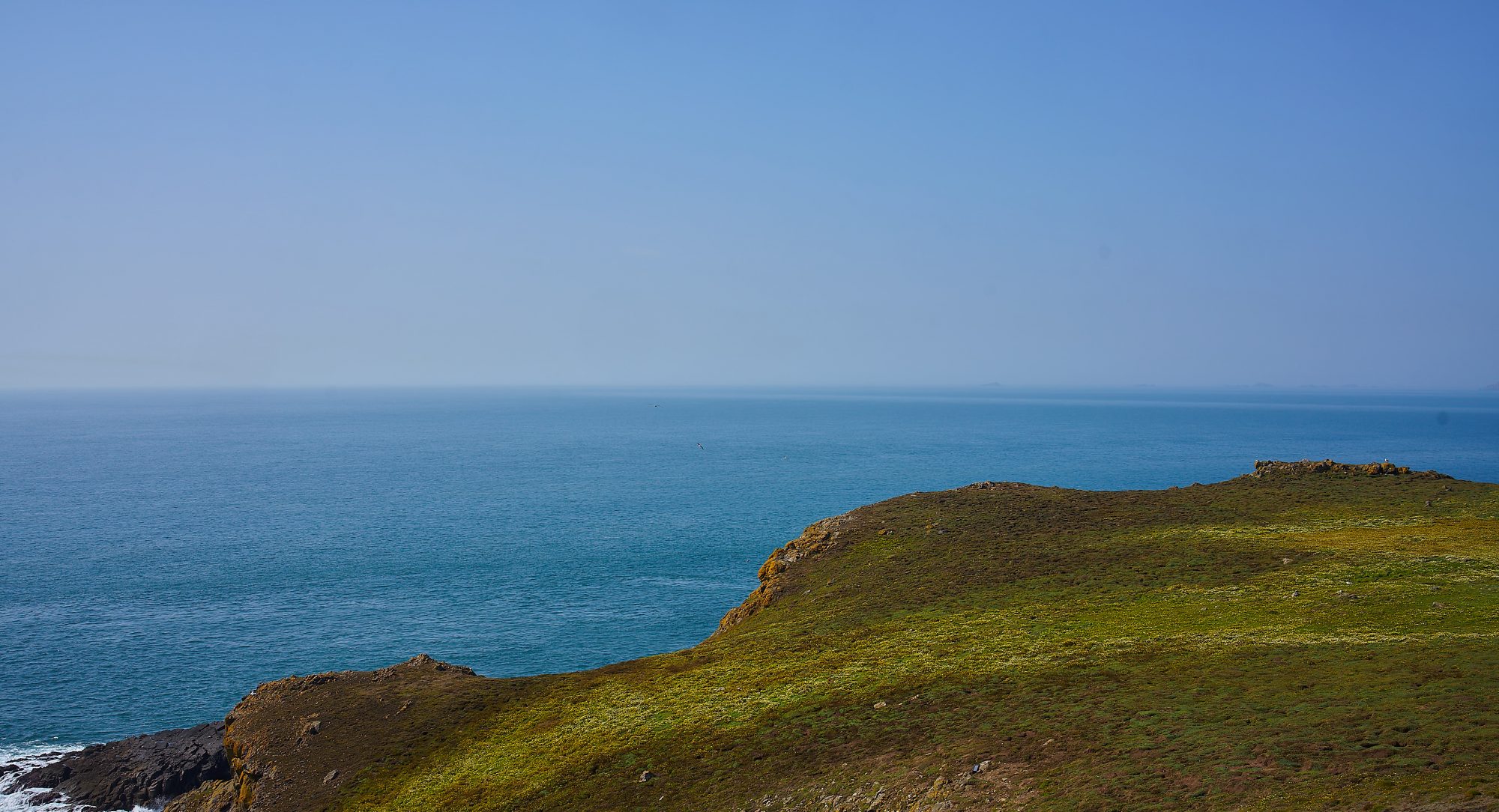
Today I am alone here. There are echoes of the busy days: some curious Wheatears come close to see what I am doing. “Where is everybody?” The cliffs, lavishly streaked with guano, are almost empty. One pair of Fulmars still has a chick to fledge, and a few dozen Kittiwakes are still nesting, but I spend hours walking in lovely sunshine in a landscape of bracken, gulls, rocks and the glorious sea.
Bracken, a native fern which has been steadily spreading over our uplands for the last 30 or so years, now covers some 70% of the island, shading out most other species. Gulls are a constant presence everywhere, and beneath our feet is what keeps them here. We cannot leave the paths because the whole island is riddled with burrows which give some safety to the population of rabbits and, in the Spring, to the Puffins, but most of them are home to one very special bird, the main focus of those who look after the island: the Manx Shearwater. Half the world population of this bird nests on the island – at the latest count a staggering 350,000 pairs! Assuming not all pairs are able to nest each year that means that there are roughly 10 nest burrows per square metre of the entire surface of the island, which is roughly 3 square kilometres. It gets even more crowded when you add in a Puffin population of 43000 and perhaps a few hundred rabbits. You can see why we have to stay on the paths, and it’s clear why the island is home to so many gulls – some 5000 Lesser and Greater Black-backed and Herring gulls. These numbers are only possible because there are no rats on the island.
The bracken cover upsets me. The book on Skomer by Mike Alexander goes into some detail about the bracken and shows a slow increase in extent from the sixties. He believes it is now in a third stage of colonisation which will see a decline. However, I was last here in August 2021 and to my eye it certainly seems to have spread since then. Though the gorgeous displays of bluebells and campion in the Spring can live with it, very little else can grow under it and at this time of year its visual appeal is zero. I asked the wardens if they had any plans to control it, but the gist of the answers was that their main objective was to look after the seabirds. I’ve spent a lot of time in the last few years learning about bio-diversity and how we need to reverse the trend towards mono-cultures and the loss of species. Walking eastwards from the Wick you pass the High Cliff on the right and then descend into a little valley and the path crosses a stream bordered by one of my favourite native plants: Purple Loostrife.
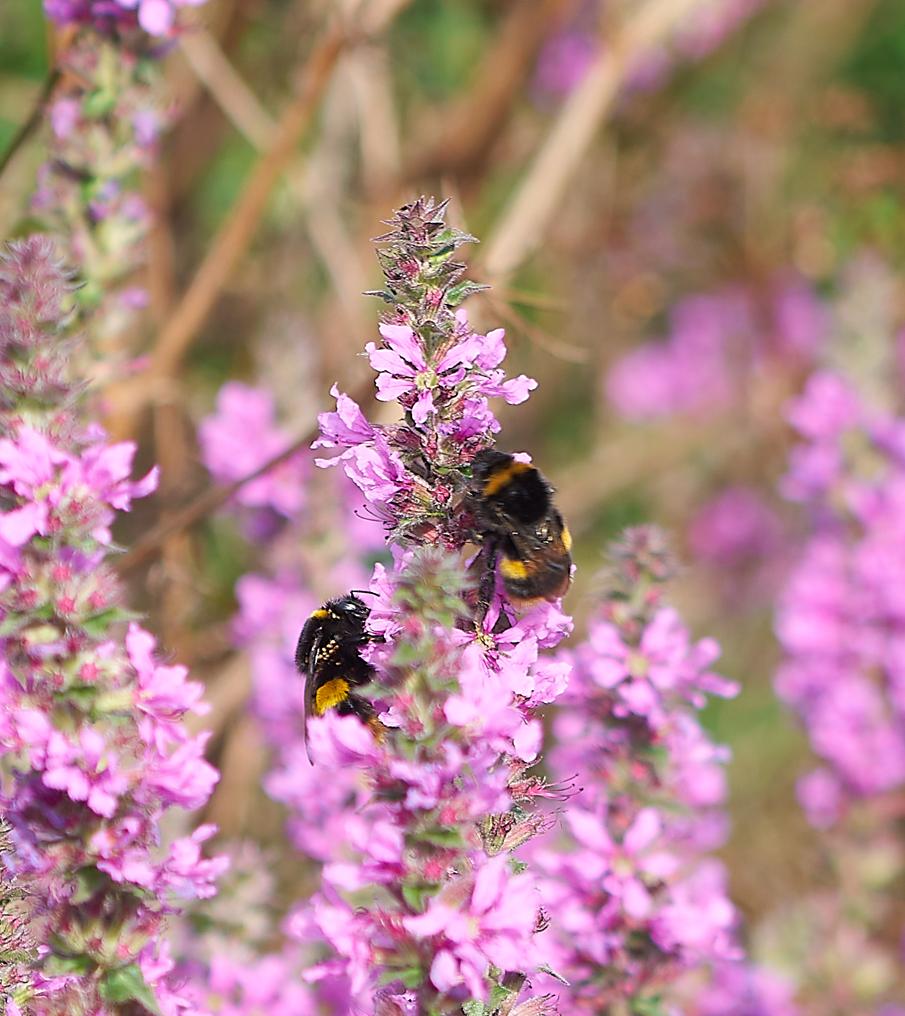
Instantly the silence of the bracken gives way to the buzz of insects: bumble bees, hoverflies, butterflies, solitary bees, flies. The little valley is full of life. The area round the farm which – unsurprisingly – used to be farmed, is also humming with life. There is another colony of loosetrife, some willow bushes, brambles, ragwort and more. You can tell where there are good populations of flying insects by the swallows. Around the farm there are swallows everywhere, and they colonise every shelter they can find, including the small bird hides:
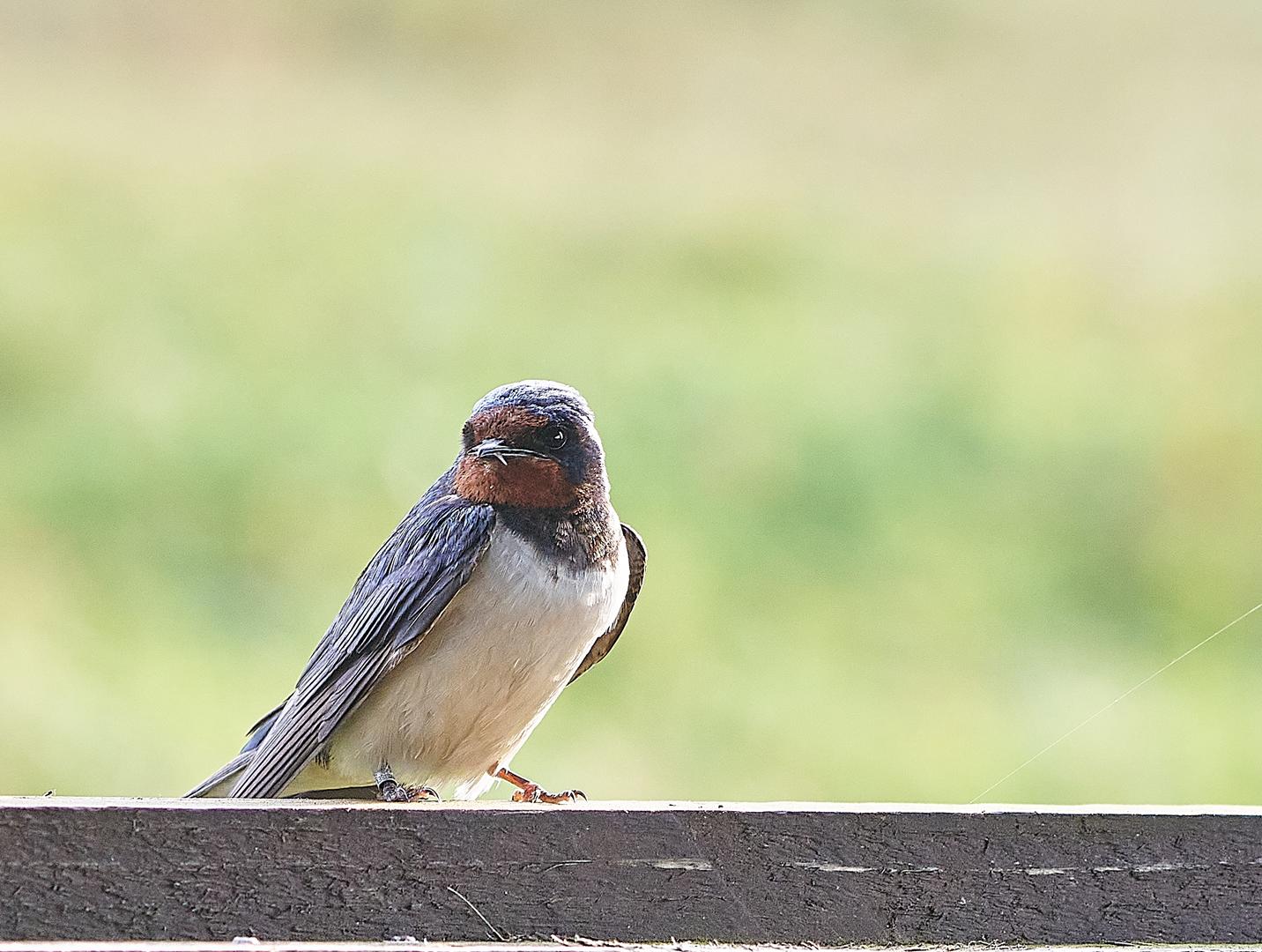
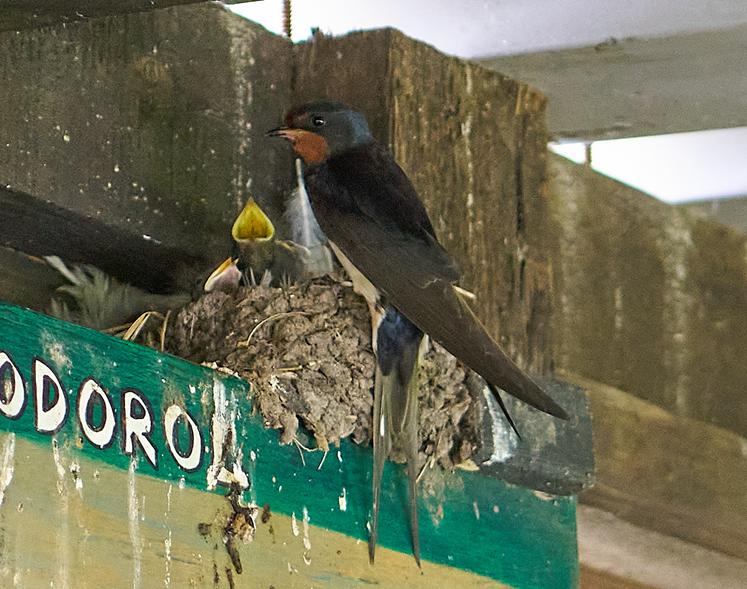
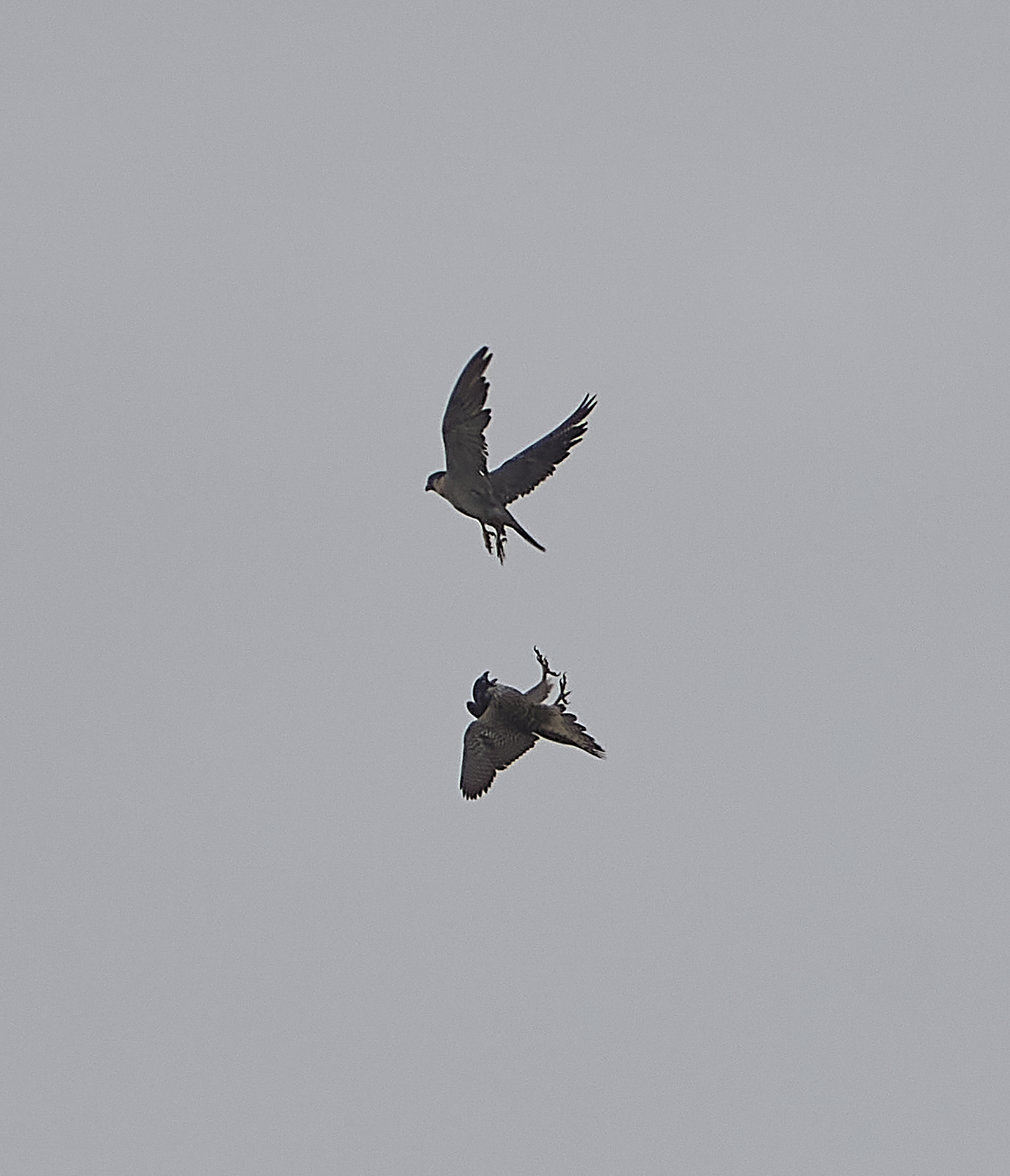
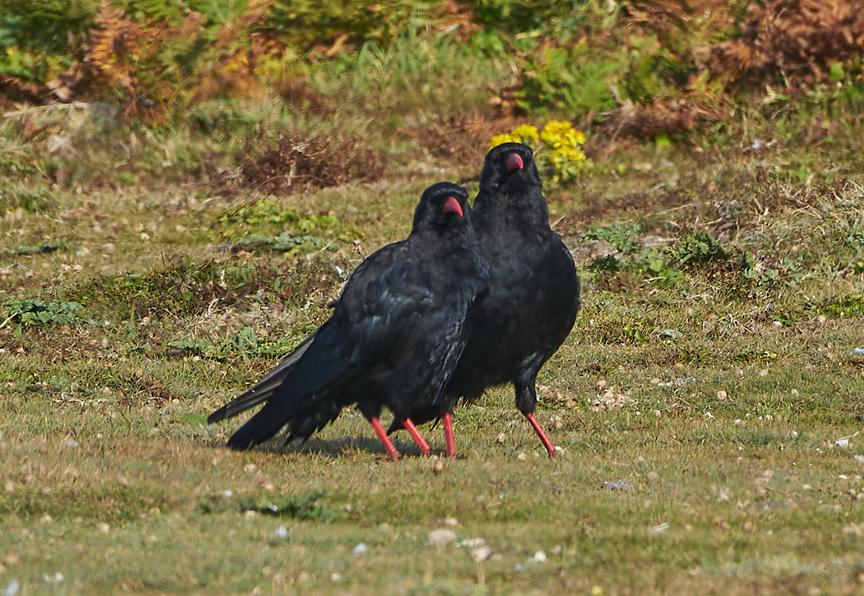
It’s not just gulls and Swallows of course, There are good populations of Ravens and Chough, several pairs of Peregrine Falcons and Kestrels, and a few Curlews. The peregrines and ravens seem to enjoy “sky dancing” at this time of year. I have always thought of this behaviour as a mating ritual, but I am drawn to the theory – upheld by the wardens here – that this is much more like dancing as we know it – they are doing it for fun! The choughs too seem to be having fun with some mutual grooming.
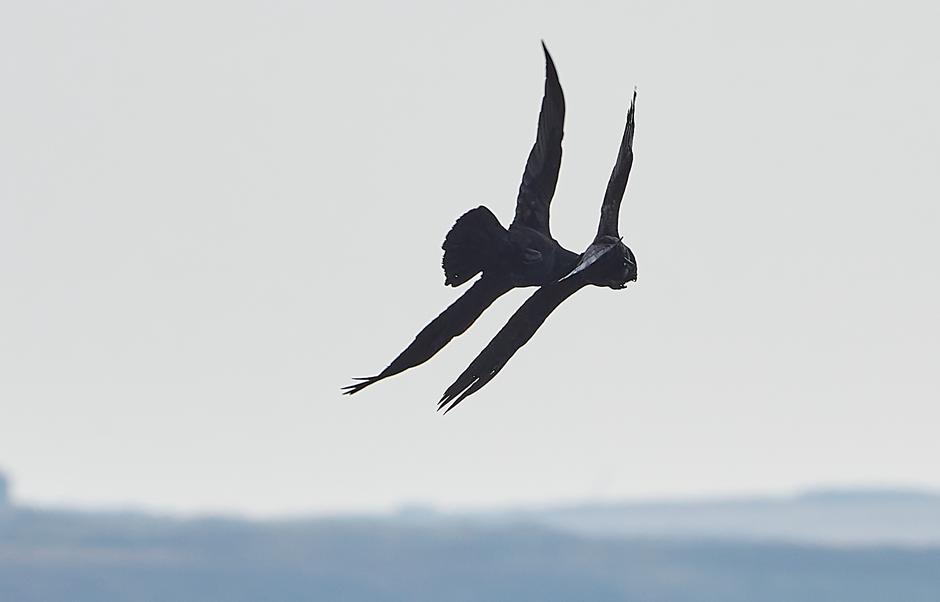
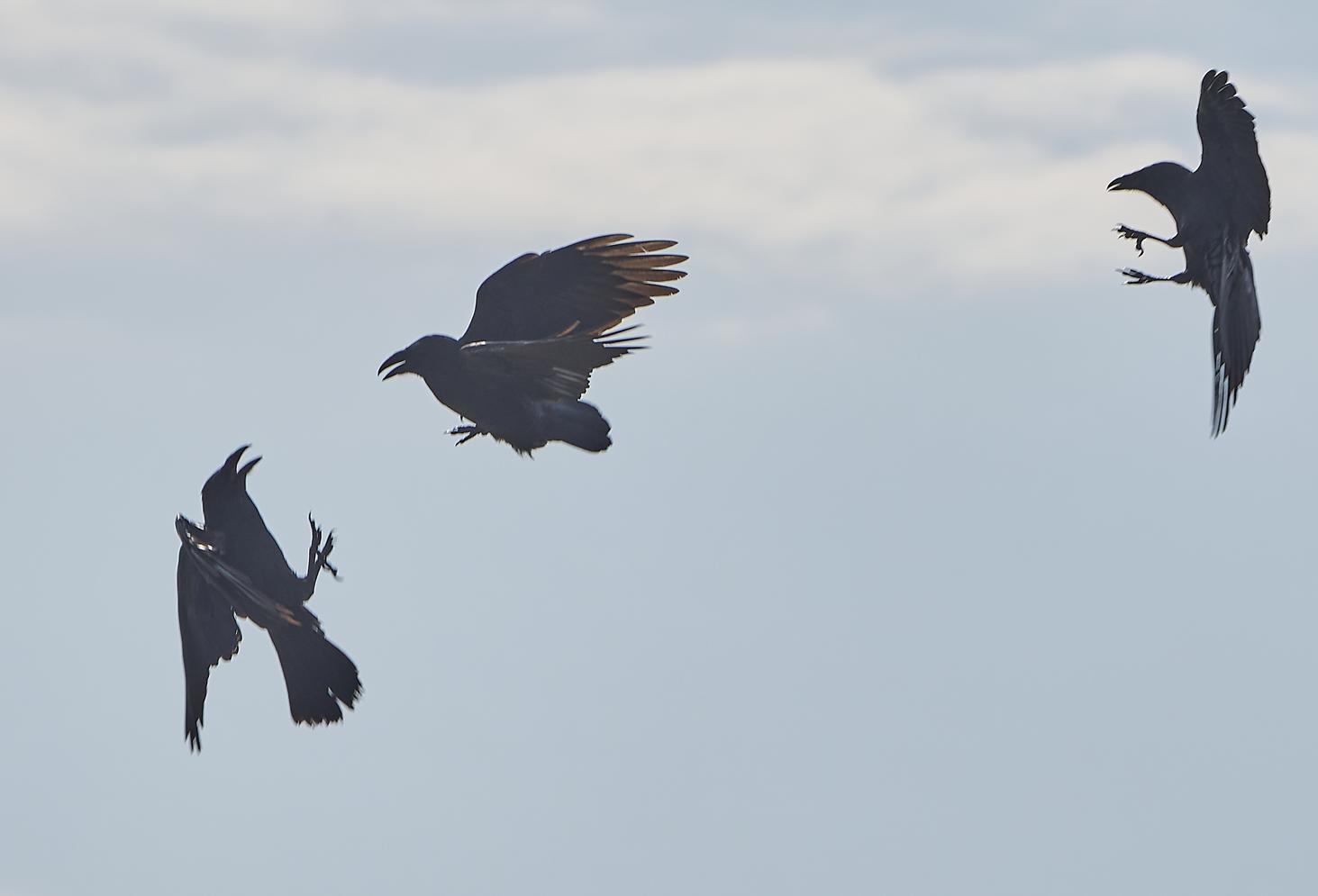
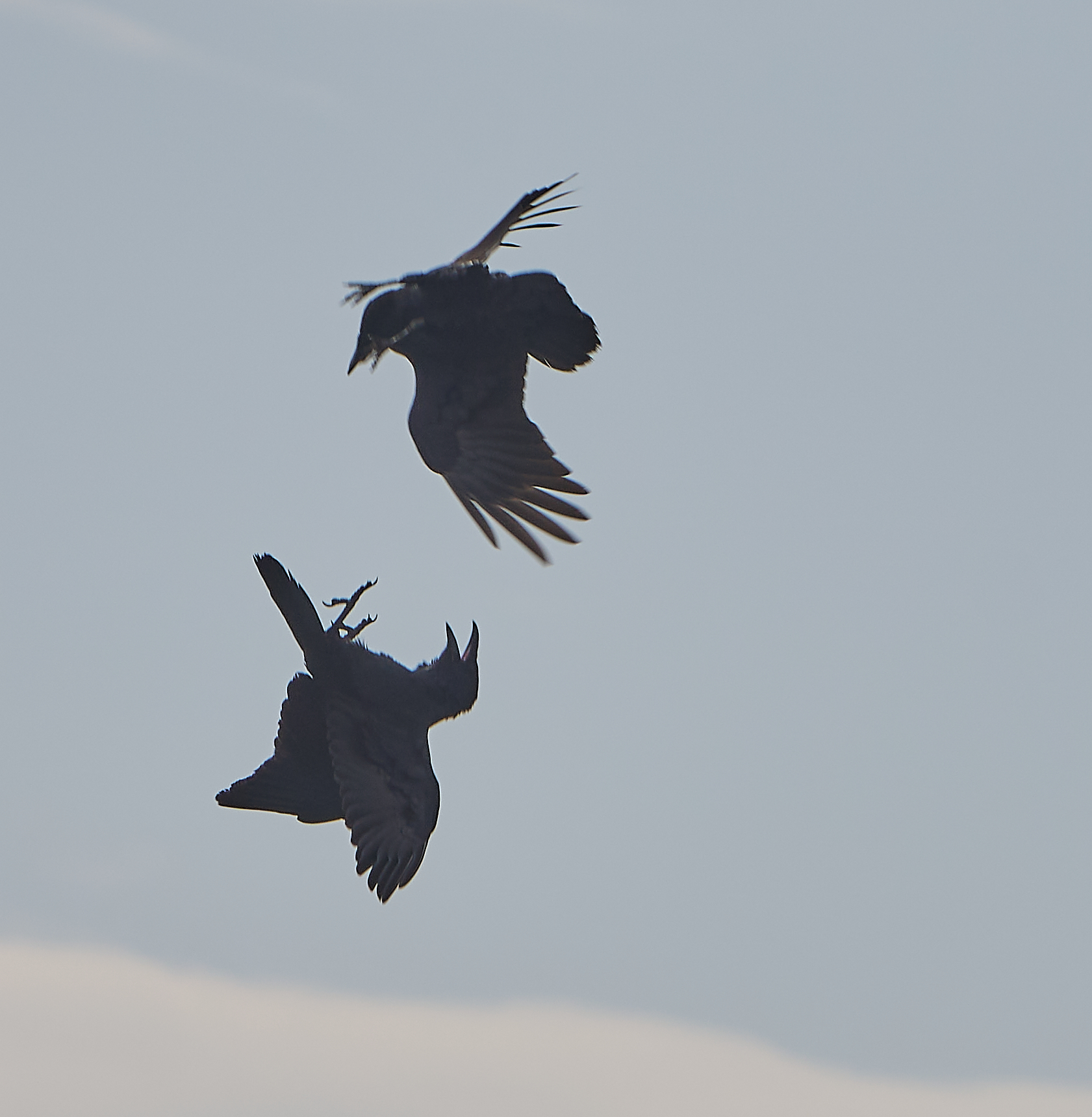
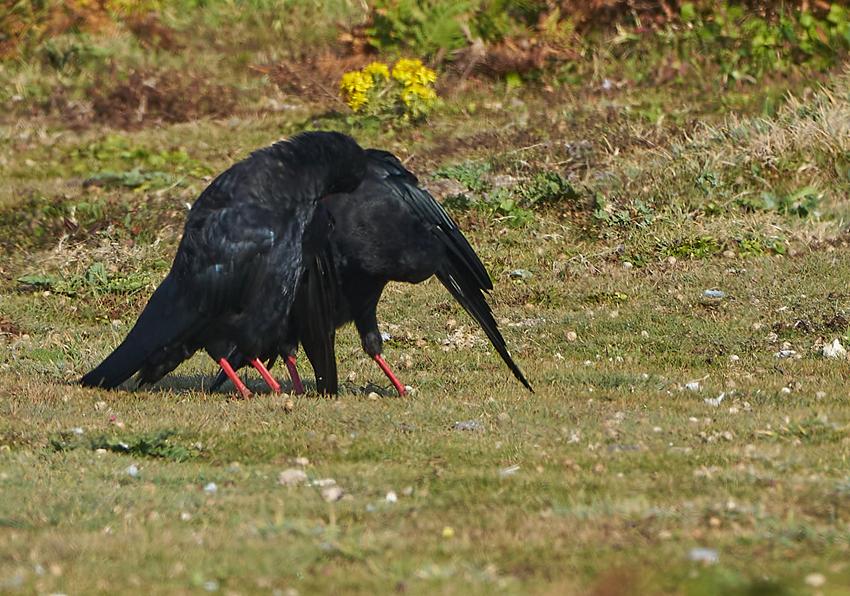
Skomer raises a question which divides the Nature Conservation community. The island is the jewel in the crown of the local Wildlife Trusts and provides a substantial proportion of their income. The seas around it are a marine conservation zone, and of vital importance to European sea-bird populations. Here the auks and shearwaters are doing well, in contrast to Scotland where they are in decline. It’s a success story. What’s the problem?
Should they prioritise saving individual species or aim for a general increase in bio-diversity? Should Skomer sacrifice some of its nest burrows to enable more species to thrive on the island? You can imagine the headlines: “Mad Scientists sacrifice Puffins for Weeds!”