
It’s a ritual: some sort of druidic rite. No, it goes back much further than the men in white robes – further than the henge stones even. It’s deep in our ancestral genes – to see the sun rise at midsummer. And it’s no good just sticking your head out of the window, it has to be in a special place, high up above the clamour of everyday life.

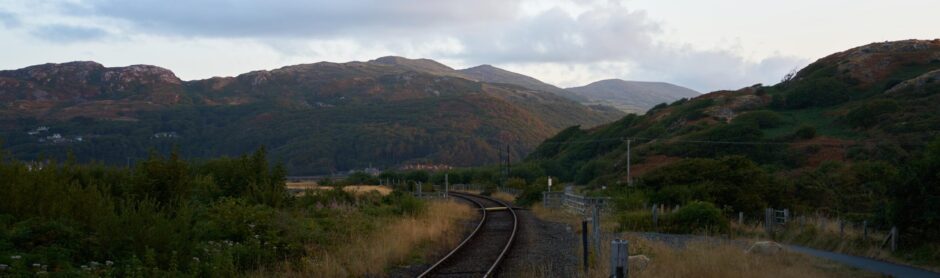
In my case the ritual site is Penstacan, just outside the village where the path winds up through old hay meadows to the “fridd”, the scrubland between the valley and the mountain. The forecast is hot: strange weather for Wales in June, but it’s cool when I set off at 4:45 in the diffused soft light between dawn and sunrise, and it’s silent apart from the clacking of the jackdaws on the church tower. The silence intensifies as I climb. A Raven calls, a few fledgling Stonechats twitter but the stillness is intense. It’s a steep climb and I’m sweating when I get to the highpoint of the path through the bracken.


South-East, directly across the valley, is where I would see the sun rise in the winter, but now it has moved a long way towards the North. It is now 5:15. I hurry to change lenses and adjust the settings as the little dome of intense orange moves rapidly upwards from behind the steep ridge which divides the Towy valley from Cynghordy and the Afon Bran. Within a few minutes it is above the horizon and to the South the distant peaks of the Carmathenshire beacons – the fans – begin to glow.


It’s still quiet up here, the ground hard and dry. The birds have stopped singing and are dispersing from their nesting territories with their fledglings. The cuckoo has stopped calling and the hares have disappeared, but the Belted Galloway cattle are still here and as I walk back through the village I am heartened to see a little family of Swallows and six Swifts.

The Swallows may be the only ones left in the village now. The Swifts seem to be clinging on but the House Martins have all gone. It’s sad but not unexpected, given the noticeable decline in flying insects. All three of these iconic birds of the summer seem to be present in town, though whether in reduced numbers I can’t tell.