The farming community is an extraordinary anachronism in a capitalist system run by large corporations. For a thousand years or more Western societies were run by the big owners of land – the Dukes and Lords – and power was passed down through the family. We can see the relics of that hierarchy in our own monarchy, but the real power in the wealthier countries of the world is now held by large multinational corporations. Although many of the largest farms are now owned by corporations, the majority are managed by a relatively impoverished group of people who own areas of land and are determined to pass on that land to the next generation of their family in the traditional way of feudal society.
Until the last 50 years or so, that tradition preserved much of the biodiversity which kept thousands of other species going in their own feudal traditions – the nest site passed on to the next generation for example. However, the rapid advance of the large scale industrialisation of our food supply (particularly the growth of supermarkets) has managed to persuade this disparate community that they need to “modernise” to become more “efficient*” and particularly to use much larger and more expensive machinery to do the work which used to be done by the farm “labourer”. A family farm can’t justify the huge capital costs of these machines so “farms out**” the work to farm contractors who borrow money from the big financial institutions.
At the same time the Green lobby is pushing for the rapid transition from fossil fuel power to sustainable electricity generation by the wind and the sun. The idea that we can rapidly move from a technological society whose wealth is based on the increasing use of fossil fuel to an equally wealthy society run on “sustainable” power is a distortion of what the “green” agenda should be. You cannot have a society dedicated to a continual increase in Gross Domestic Product which is sustainable. “Sustainable Growth” is an oxymoron. Growth is part of a natural cycle which must include decline and re-birth.
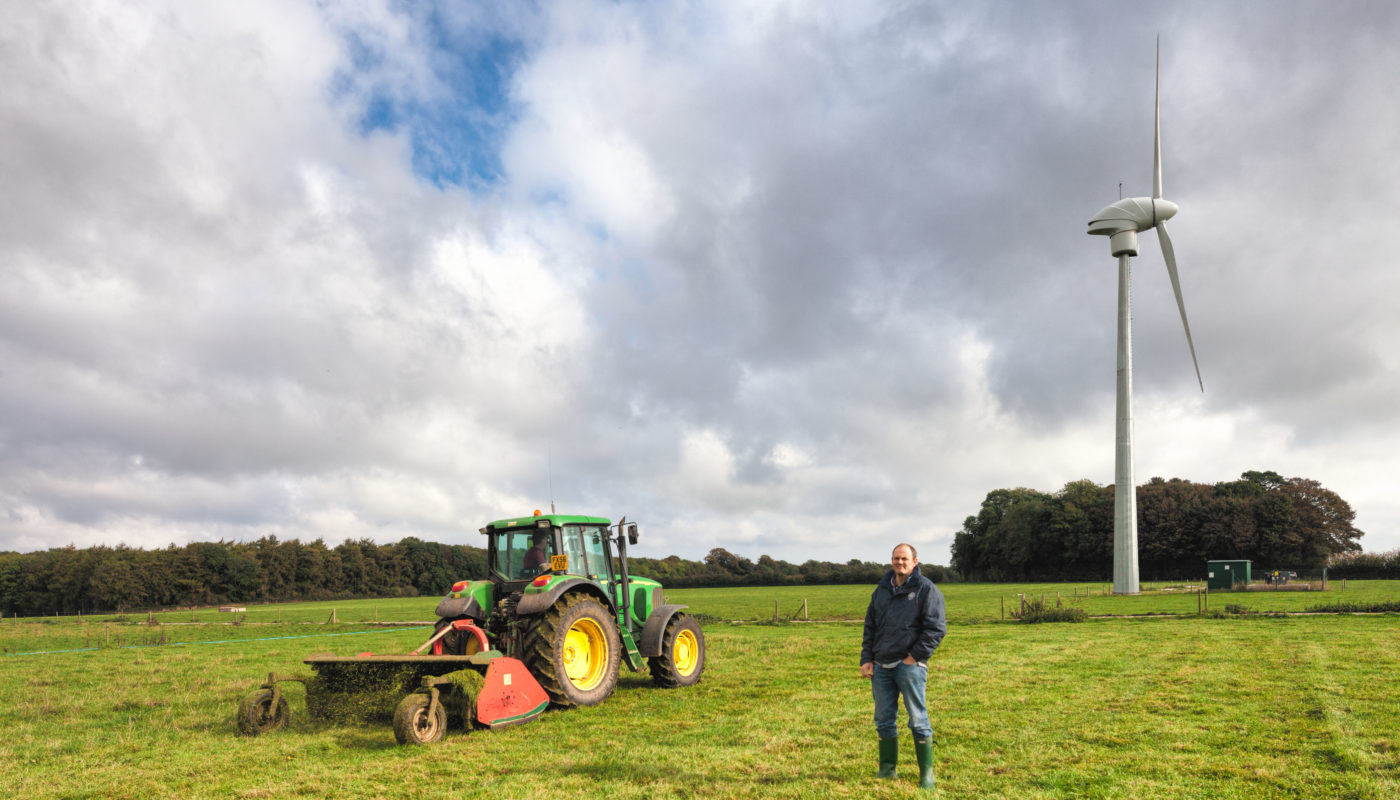
These developments have put the farming community in direct conflict with the organisations dedicated to nature conservation. The farmers, often in debt and struggling to make a living on prices fixed by the supermarkets, do not notice the big declines in biodiversity happening on their farms because we are all conditioned to notice the arrival of something new much more readily than the gradual loss of something old. (The decline of “bug splatter” on car windscreens is one of the best examples of this.) The farmers are right to be angry, but their aim is skewed. They should be angry that their precious land, which they have “looked after” for generations is being turned into an industrial site to enable us to continue our wasteful, lavish, urban lifestyles.
In a logical society farmers, those working directly on the land, should have a natural common cause with “Green” politics. That they are too often at loggerheads is down to the modern tendency of information technology in the form of social media to push people into opposing camps. Anger is a great tool to get people trading opinions on social media and thus increasing advertising revenue. Thus the conservationists blame the farmers for species decline and the farmers blame the conservationists for trying to turn productive land into weed-infested “wilderness”, or turbine-infested ugliness.
Another divisive issue is what one side calls “field sports” and the other calls “blood sports” – rearing and shooting game birds and hunting foxes and hares with hounds. The British Association for Game and Conservation, one of two organisations (the other is the Game and Wildlife Conservation Trust) dedicated to reducing the areas of conflict between shooting and wildlife conservation, has produced the “Value of Shooting Report 2024” which claims that the industry is worth £3.3 billion to the UK economy, providing 620,000 jobs. The “product” of this huge industry is not food, which is a very small part of what shooting is all about, but entertainment. Hunting and shooting offer healthy (to humans) entertainment and employment to rural communities in the winter when farming is at its most challenging. Wealthy people pay very large sums of money to be offered the chance of killing hundreds of birds in a short time because they find it exciting and enjoyable. Those they employ to feed and drive the birds earn some extra cash when there are no holiday-makers to keep them in employment.
I am not one of those who think that it is evil to enjoy killing animals. If we didn’t instinctively enjoy killing, we would not be here. However, I do sympathise with those working to restore natural environments who see hunting and shooting as at best irrelevant and at worst deeply damaging to the countryside.
Farmers as a group are conservative. They value tradition and stability and various forms of hunting have been part of their lives for centuries, but they are not elitist. They are very supportive of members of the group. If one farmer in the area is in difficulty the others will make great efforts to offer support.
Change will not come quickly but it is coming. Some of the big ideas in conservation such as Regenerative Farming and Mob Grazing are gaining ground – quite literally. The shooting lobby is reluctantly moving away from lead shot – a big source of lead pollution in areas where there are shoots – and they are employing nature conservation scientists to look at ways to increase biodiversity and wildlife on shooting estates. “Corporate Greenwashing” cries the left. I’m undecided.
*Looking at a reduction in the use of fossil fuel, a more efficient device is one which produces more output for less input of energy. Examples would include a spade, a composting toilet or an LED light bulb. It is not one which uses a high input to reduce the amount of time taken to do the job.
** Originally the practice of making a rental payment to graze animals on land owned by someone else.